
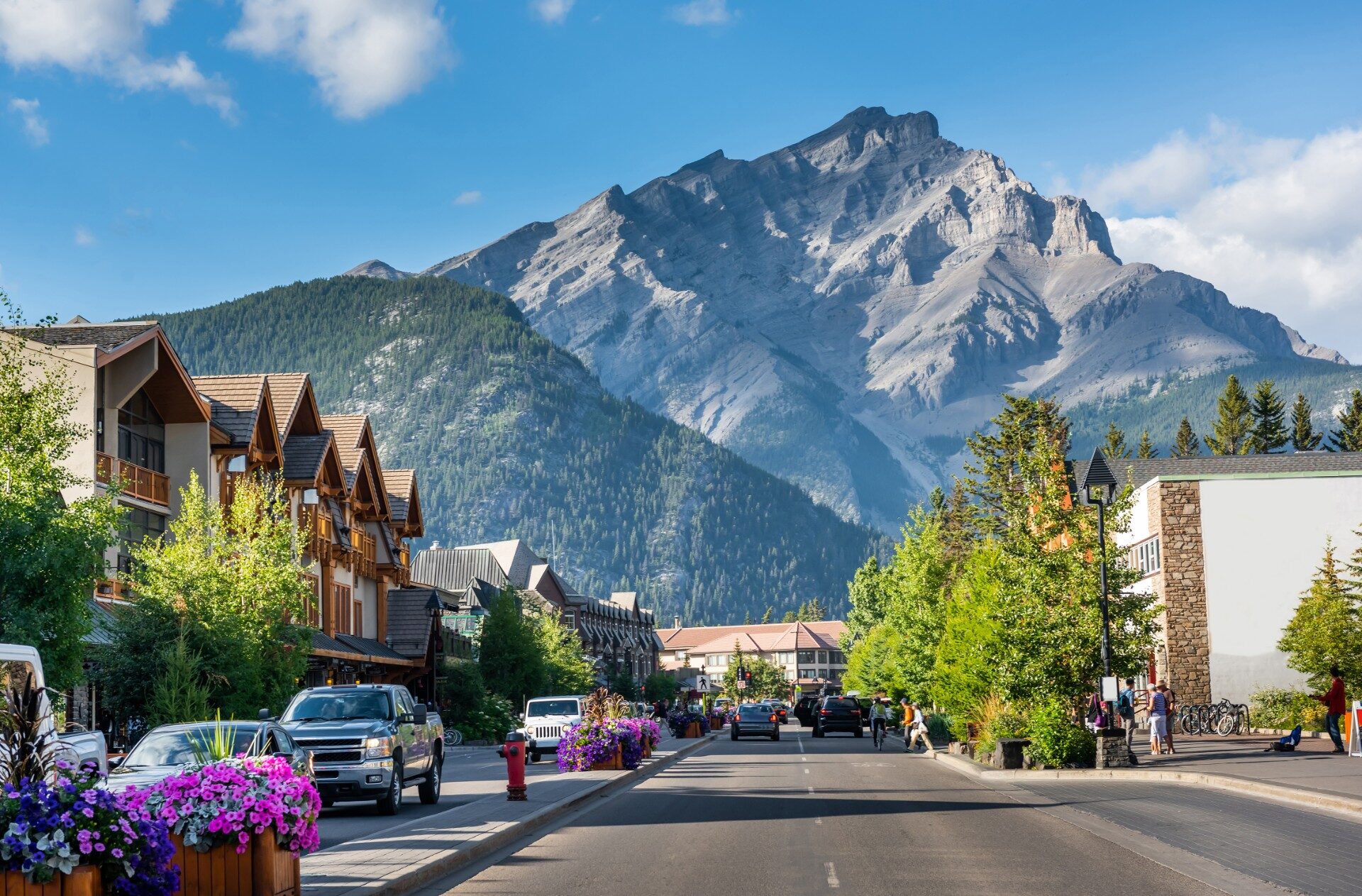
Four Realistic Ways to Get from Calgary to Banff
There is no single best way to travel from Calgary to Banff — it depends on how many of you there are, how much luggage you have, whether you want a car once you arrive, and how much of the day you are willing to spend on logistics. This guide sets out what each option actually involves, where each one is genuinely the better choice, and where it is not. Red Mile Limousine Services operates private transfers on this route, so we have been straightforward about the cases where a shuttle or a rental car is the more sensible pick.
Option 1 — Scheduled shuttle or coach
Several operators run scheduled services between Calgary, Calgary International Airport and Banff, selling seats individually. Departures follow a published timetable and most services call at a set list of Banff hotels in sequence.
- Works well when you are travelling as one or two people with normal luggage, your arrival time is flexible, and you do not need a vehicle once you are in Banff.
- Costs are quoted per seat, so a solo traveller pays the least and a family of five pays five times over.
- Watch for the wait between landing and the next departure, the hotel-by-hotel drop-off order, and limits on oversized items such as ski or golf bags.
Option 2 — Rental car
Renting at Calgary International Airport and driving yourself is the option that gives you the most freedom once you arrive. The drive is straightforward in good weather: Stoney Trail to the Trans-Canada Highway, then west the whole way.
- Works well when your itinerary includes Lake Louise, Moraine Lake, Johnston Canyon, Kananaskis or day trips that would otherwise need separate transport, and you are comfortable driving on the right in mountain conditions.
- Remember the extras — fuel, insurance, a Parks Canada pass for any vehicle stopping inside the park, and parking in Banff townsite, which is genuinely tight in summer and over the holidays.
- Watch for the counter queue after a long-haul arrival, and winter driving between November and April — the Trans-Canada west of Canmore can change character quickly.
Option 3 — Rideshare and taxi
Rideshare and taxi coverage is strong inside Calgary, but availability for a one-way trip of 140 km into a national park is far less predictable, and drivers are not obliged to accept it. Pricing is dynamic rather than fixed, so a busy arrivals bank or a winter storm can move the fare considerably.
- Works well when you are already in Calgary, plans change at short notice and you are willing to accept whatever the app quotes at that moment.
- Watch for a return leg from Banff, where rideshare supply is thinner again, and the absence of child seats.
Option 4 — Private transfer with a chauffeur
A private transfer is booked in advance for your group alone, priced per vehicle rather than per seat, and runs directly from your pickup point to your Banff hotel door. Airport bookings are matched to your flight, so an early or delayed arrival does not need a phone call from you.
- Works well when you are a family or a group of three or more, you are arriving with ski gear, strollers or a lot of luggage, you land late at night, or you simply do not want to drive after a long flight.
- Costs are quoted per vehicle and fixed at booking, which is why the per-person figure falls as the group grows.
- Watch for the fact that you will not have a car in Banff — which is fine if you are staying in the townsite, and less convenient for a self-guided Rockies road trip.
Side-by-side comparison
Nothing in the table settles the question on its own. Group size and whether you want a car in the park are what usually decide it.
Which option fits your trip
A scheduled shuttle is usually the most economical choice, and Banff is walkable once you arrive. A private transfer buys you a fixed departure time and a direct run instead.
Per-seat pricing adds up quickly. A per-vehicle transfer often lands close to the shuttle total for the group, with door-to-door service included. Infant, toddler and booster seats are available at no additional charge when requested in advance..
If Lake Louise, Moraine Lake, Kananaskis and the Icefields Parkway are all on the list, rent a car. Nothing else gives you that freedom for a whole week.
Arriving at 23:00 after ten hours in the air is the case where a pre-booked private transfer earns its keep — no counter queue, no unfamiliar highway in the dark.
Check baggage limits before committing to a shuttle. Ski and boot bags are where per-seat services and small rental cars both run out of room.
When delegates land on different flights, a scheduled service rarely lines up. Vehicles booked against individual arrival times are simpler to coordinate.
What every option has in common
- The same road. Every option follows the Trans-Canada Highway west. Nothing is meaningfully faster than anything else outside of stop patterns.
- A park pass. A Parks Canada pass is required for any vehicle stopping inside Banff National Park, whoever is driving.
- Winter conditions. Between November and April, allow extra time west of Canmore regardless of how you travel.
- Wildlife on the road. Elk and deer near the highway are routine, particularly at dawn and dusk.
If a private transfer is the right fit
Red Mile Limousine Services runs private transfers on this route year-round. Which page you want depends on where the trip starts:
- Landing at YYC? See Calgary Airport to Banff transfers for flight monitoring, arrivals meet-and-greet, waiting time and luggage planning.
- Starting from a Calgary address or hotel? See Calgary to Banff limo and private car service for vehicles, chauffeur bookings and route options.
- Still planning the trip itself? The Banff destination guide covers hotels, sightseeing and getting around once you are there.
Decided a private transfer suits your trip?
Fixed per-vehicle quote before you book, direct to your Banff hotel door. Takes about a minute to get a price.
Related guides
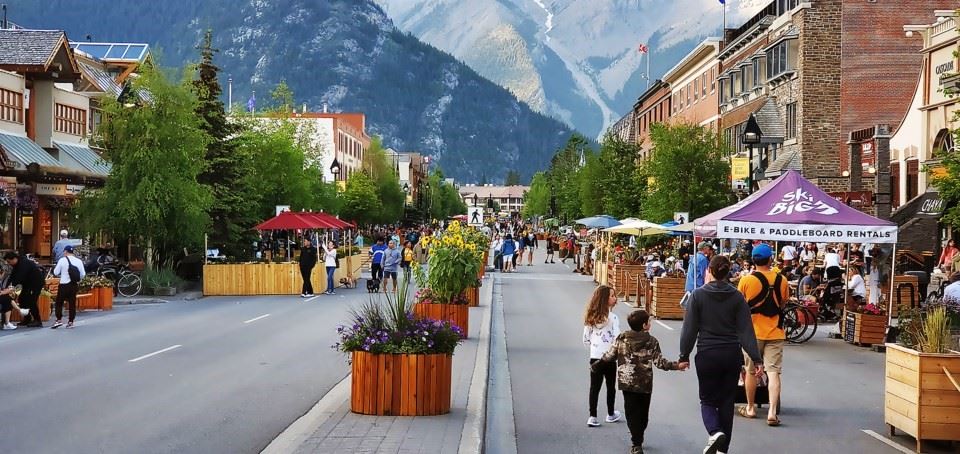


Calgary to Banff transport — common questions
What is the cheapest way to get from Calgary to Banff?
For one or two people, a scheduled shuttle seat is normally the lowest total cost. As group size grows, per-seat pricing catches up with the per-vehicle cost of a rental car or a private transfer, so the cheapest option genuinely changes with the number of travellers.
Is there a train from Calgary to Banff?
There is no regular scheduled passenger rail service between Calgary and Banff for everyday travel. Road transport — shuttle, car or private transfer — is how visitors make the trip.
Do I need a car once I am in Banff?
Not if you are staying in the townsite. Banff is compact and walkable, and local transit covers the main destinations. A car becomes far more useful if you plan to explore Lake Louise, Moraine Lake, Kananaskis or the Icefields Parkway independently. See getting around Banff without a car.
How long does the drive from Calgary to Banff take?
Roughly 1 hour 30 minutes from downtown Calgary and 1 hour 30 to 45 minutes from Calgary International Airport in normal conditions. Winter weather, construction and peak summer traffic can extend that.
Do I need a Parks Canada pass?
Yes, for any vehicle stopping inside Banff National Park. This applies whether you drive yourself, take a shuttle or travel by private transfer. Passes can be bought in advance online or at the park gate.
Is a rental car difficult to drive in winter?
The Trans-Canada Highway is a maintained four-lane route, but mountain winter conditions between November and April are real. If you are not used to driving on snow and ice, that is one of the strongest arguments for letting someone else drive.
Can I stop on the way from Calgary to Banff?
With a rental car or a private transfer, yes — Cochrane, Canmore and the Bow Valley Parkway are the usual choices. Scheduled shuttles run their published route and do not add stops. The drive guide covers the worthwhile ones.
Which option is best for a family with young children?
Child seats are the deciding factor. Shuttles generally do not provide them, rental companies charge for them, and private transfers can install them before pickup. For three or more travellers, per-vehicle pricing also tends to compare well.