
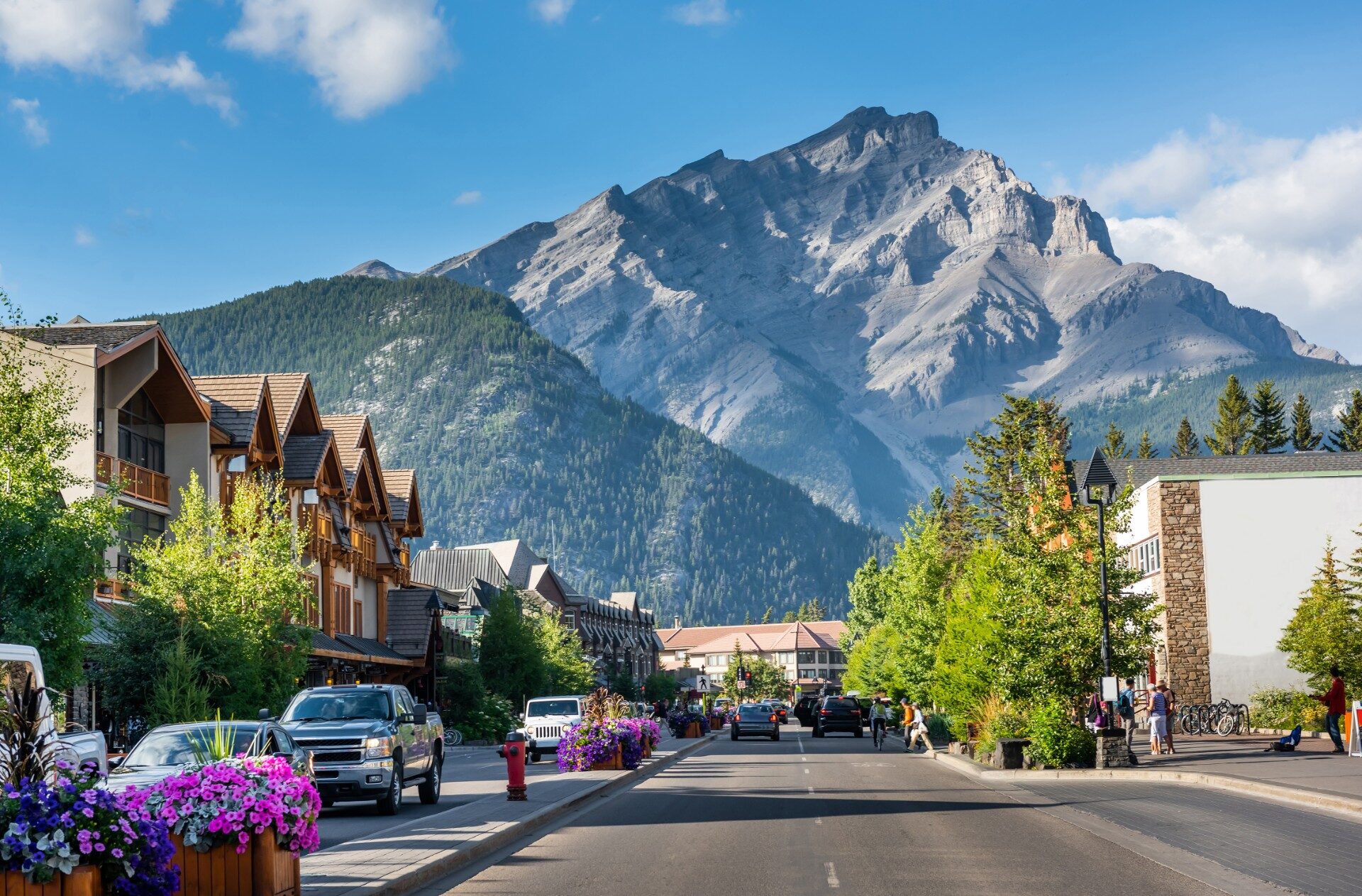
How Far Is Banff from Calgary, and How Long Does the Drive Take?
The Calgary–Banff run is one of the most-driven stretches of highway in Alberta, and on a clear summer afternoon it is genuinely easy. It is also a mountain highway that can change character in an hour. This guide covers the numbers you need to plan the trip — distance, realistic drive times by season, the route itself, where to stop and how much luggage the drive can absorb — plus an honest note on when handing the drive to someone else is worth it.
~125–130 km
Downtown Calgary to Banff townsite via the Trans-Canada Highway (Highway 1).
~140–145 km
Calgary International Airport (YYC) to Banff townsite and hotels.
~1 hr 30 min
Normal conditions. Allow up to 2 hours in winter or on peak long weekends.
Park pass
Required for any vehicle stopping inside Banff National Park.
Distance and drive time
Banff townsite sits approximately 125 to 130 kilometres west of downtown Calgary, and approximately 140 to 145 kilometres from Calgary International Airport — the airport adds distance because you start north-east of the city and have to come around it. Both journeys use the Trans-Canada Highway (Highway 1) for almost the entire length.
In normal conditions, plan on about 1 hour 30 minutes from downtown and 1 hour 30 to 45 minutes from YYC. Those are moving times on a clear day with no incidents, which is the number most route planners give you and the number most trips beat only slightly.
- Summer weekday, clear ~1 hr 30 min
- Summer long weekend, afternoon add 15–30 min — park gate queues and townsite traffic
- Winter, dry and clear ~1 hr 40 min
- Winter, active snowfall west of Canmore add 20–40 min, sometimes more
- Early morning, any season fastest run of the day
The route, step by step
From downtown Calgary, the route is close to trivial: head west on the Trans-Canada Highway and stay on it. There are no turns to remember until the Banff exits.
From Calgary International Airport, the usual line is Airport Trail to Deerfoot Trail, then Stoney Trail (Highway 201) west and south around the city onto the Trans-Canada. Stoney Trail avoids city-centre traffic entirely and is the route most drivers who make this trip regularly will take.
Landmarks arrive in a predictable order: Calgary's western suburbs, then open foothills past Cochrane, then the Rocky Mountain front range coming into view — usually the moment passengers start reaching for a camera. From there it is Kananaskis-side foothills, the narrowing Bow Valley, Canmore, the Banff National Park east gate, and the townsite exits shortly after.
Highway and winter conditions
The Trans-Canada is a divided, maintained four-lane highway the whole way, which is what makes the drive approachable for visitors. The caveats are seasonal rather than structural.
- November to April is genuine winter driving country. Snow, packed ice and blowing snow are normal west of Cochrane, and conditions can differ sharply between Calgary and the Bow Valley on the same afternoon.
- Winter tyres matter here. All-season tyres are legal but noticeably less capable on the mountain sections; if you are renting, ask what the vehicle is fitted with rather than assuming.
- Wildlife is a real hazard, not a novelty. Elk and deer near the highway are routine at dawn and dusk, and the wildlife fencing and overpasses in the park exist precisely because of it.
- Check conditions before leaving. Alberta 511 publishes live road reports for Highway 1, and it is worth a look in winter even when the sky over Calgary looks fine.
- Summer construction and long-weekend volume are the warm-season equivalents. Neither is dramatic, but both eat the buffer you did not build in.
Stops worth making
The drive rewards a stop or two, particularly if you have flown in and would rather ease into the mountains than arrive at speed.
- Cochrane — about 45 km west of Calgary, the last easy town before the foothills. Coffee, a walkable main street and the long-standing ice cream stop that most locals will name if you ask.
- Yamnuska Wolfdog Sanctuary — between Cochrane and Canmore, a short detour that works well with children who have been sitting still since the airport.
- Canmore — roughly 25 km before Banff and outside the park gate. Groceries, restaurants and Three Sisters views, and a useful place to stock up before hitting townsite prices.
- Bow Valley Parkway (Highway 1A) — the slower parallel route between Banff and Lake Louise, with Johnston Canyon, Castle Mountain viewpoint and Morant's Curve. Worth the extra time in summer; check seasonal travel restrictions before relying on it.
If you are driving yourself, factor stops into your arrival time rather than your departure time — the Banff check-in desk does not care why you are late.
Luggage planning
Luggage is the single most common thing people underestimate on this route, because a Banff trip is rarely a carry-on trip.
- Ski and snowboard bags are long and rigid. A mid-size sedan or compact rental will take one or two at most, and only with seats folded — which costs you a passenger seat.
- Boot bags count separately. Each skier effectively brings two pieces of oversized luggage plus a normal suitcase.
- Strollers and car seats are bulky. If you are renting, confirm child seats are actually available in the sizes you need before you land — availability is not guaranteed at peak times.
- Count bags, not people. A vehicle that seats six rarely carries six people's winter luggage. Work out the bag count first and pick the vehicle to match — our fleet page lists passenger and bag capacity side by side for exactly this reason.
When handing over the drive is worth it
Driving yourself is perfectly reasonable on this route, and for a multi-day Rockies itinerary a rental car is usually the right answer. There are a few situations where it is not:
- You land late or after a long-haul flight. An unfamiliar mountain highway in the dark, at the end of a ten-hour flight, is the worst version of this drive.
- You are travelling in deep winter and have never driven on snow. Competence here is a matter of practice, not confidence.
- Your luggage exceeds your vehicle. See above — this is the most common trigger.
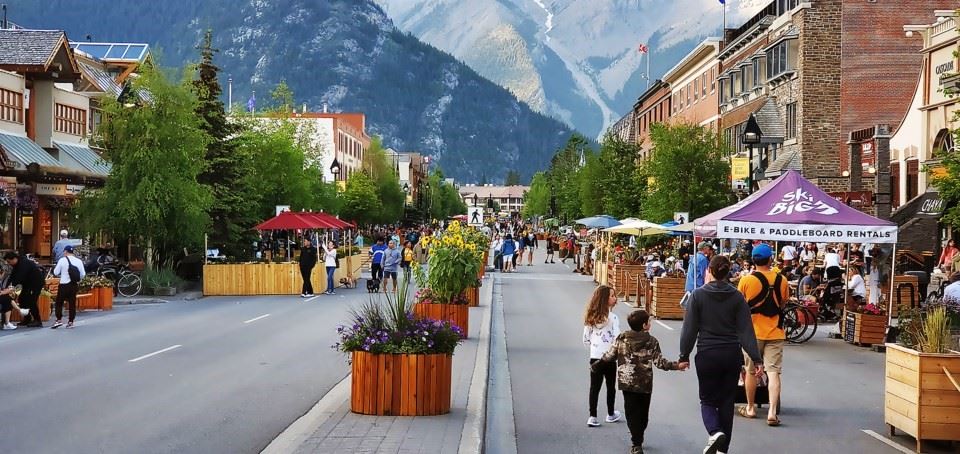
- You are staying in the townsite. Banff is walkable and served by local transit, so a rental car mostly becomes a parking problem. Getting around Banff without a car covers what that looks like in practice.
- Everyone in the group wants to look out of the window. Not a small thing on a drive like this one.
If a private vehicle fits your trip, the booking pages are separated by where you start: Calgary Airport to Banff transfers covers flight monitoring, arrivals meet-and-greet and airport waiting time, while Calgary to Banff limo and private car service covers city pickups, vehicle choice and chauffeur bookings. Weighing the alternatives instead? The shuttle, rental car or private transfer comparison sets them out side by side.
Would rather not drive it yourself?
A private vehicle for your group, door to hotel, with the timing built around your arrival rather than a timetable.
The Calgary to Banff drive — common questions
How far is Banff from Calgary?
Banff townsite is approximately 125 to 130 kilometres from downtown Calgary and approximately 140 to 145 kilometres from Calgary International Airport (YYC). Both routes follow the Trans-Canada Highway (Highway 1) west almost the whole way.
How long does the drive from Calgary to Banff take?
About 1 hour 30 minutes from downtown Calgary and 1 hour 30 to 45 minutes from Calgary International Airport in normal conditions. Winter weather, summer long-weekend traffic and park-gate queues can add 15 to 40 minutes.
Is the Calgary to Banff drive difficult?
In good weather, no — it is a divided four-lane highway with no complicated turns. Between November and April it becomes genuine mountain winter driving, with snow, ice and blowing snow common west of Cochrane.
What is the best route from Calgary Airport to Banff?
Airport Trail to Deerfoot Trail, then Stoney Trail (Highway 201) west and south around the city onto the Trans-Canada Highway. This avoids city-centre traffic entirely and is the route most regular drivers use.
Do I need winter tyres to drive to Banff?
They are not legally mandatory on this route, but they make a substantial difference on the mountain sections in winter. If you are renting, ask what the vehicle is fitted with rather than assuming.
Do I need a Parks Canada pass?
Yes, for any vehicle stopping inside Banff National Park. A day pass or annual Discovery Pass can be bought online in advance or at the park gate — buying ahead avoids the queue on busy weekends.
Where should I stop between Calgary and Banff?
Cochrane is the usual first stop about 45 km west of Calgary; Canmore sits roughly 25 km before Banff and is outside the park gate; and the Bow Valley Parkway is the scenic alternative between Banff and Lake Louise. A designated 17-kilometre eastern section of the parkway is closed to all travel from 8:00 p.m. to 8:00 a.m. between March 1 and June 25 each year, so check the current Parks Canada bulletin before relying on it.
Will my luggage fit in a rental car?
Ski and snowboard bags are the usual problem — they are long and rigid, and a compact car takes one or two at most with seats folded. Count bags rather than passengers when choosing a vehicle, and remember boot bags count separately.
Is there wildlife on the highway?
Yes. Elk and deer near the Trans-Canada are routine, especially at dawn and dusk. The wildlife fencing and overpasses through the park exist for that reason — slow down where signage indicates crossings.
Where can I check road conditions?
Alberta 511 publishes live road reports for Highway 1. It is worth checking in winter even when the weather in Calgary looks clear, because conditions in the Bow Valley can differ sharply on the same day.