
How Moraine Lake Access Works, When to Visit, and Where a Private Transfer Fits
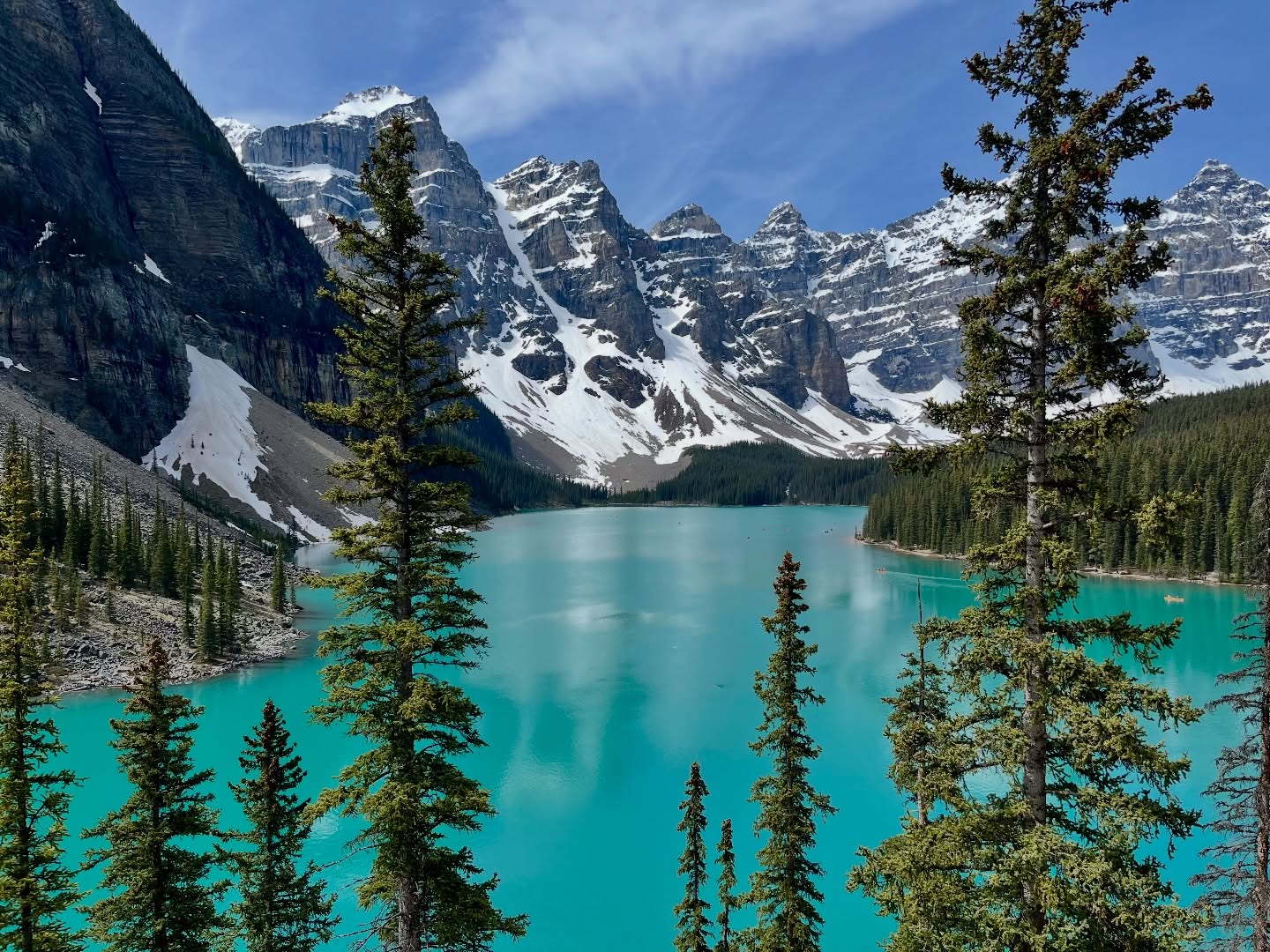
Moraine Lake looks exactly like the photographs. That's not always true of famous places — they're often smaller, less vivid, more surrounded by infrastructure than the images suggest. Moraine Lake is genuinely as beautiful as it appears. The turquoise is real. The Ten Peaks are real. The Rockpile view is real. What is also real is that visiting requires more planning than it used to. Moraine Lake Road is closed to personal vehicles year-round, and no private transfer changes that on its own. Access runs through Parks Canada shuttles and through commercial operators that meet all current Parks Canada requirements.
No personal vehicles
Moraine Lake Road is closed to personal vehicles year-round. Access is by Parks Canada shuttle or an eligible commercial operator.
Peak colour: July–Aug
Most vivid turquoise when glacial melt is highest. Golden larches: last 2 weeks of September.
Best light: 6–8am
Soft light, calm water, fewest people. The Rockpile fills before 7am on summer mornings.
~197 km from Calgary
Same distance as Lake Louise — we transfer you to a Lake Louise connection point, where the shuttle system begins.
Book Your Private Transfer to the Lake Louise Connection Point
Most Moraine Lake trips start with a private transfer from Calgary or Calgary Airport to Lake Louise, where the Parks Canada shuttle system begins. Choose your vehicle for that leg — sedan for two, Business SUV for the family and gear, or a passenger van for the whole group. Sedan and SUV bookings do not include direct Moraine Lake Road access.
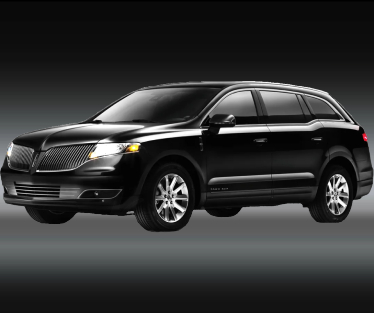 Executive Sedan
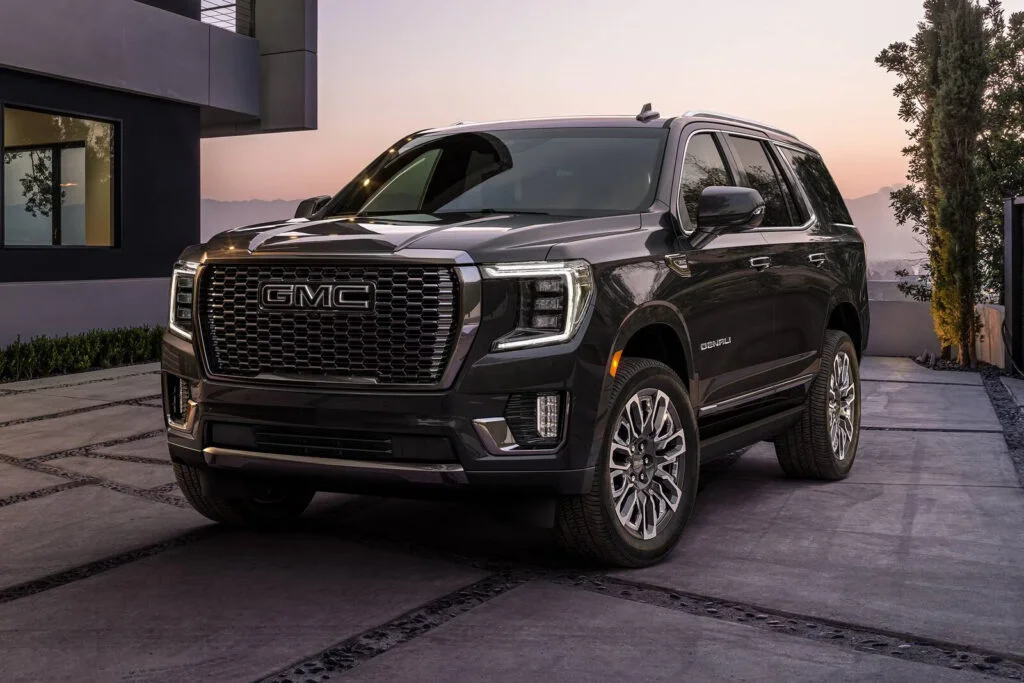 Business SUV
 Passenger Van
See full specs and pricing on our fleet page, or get an instant quote and we will match the right vehicle to your group for the Lake Louise leg.
What is Moraine Lake?
Moraine Lake is a glacially-fed lake in the Valley of the Ten Peaks, approximately 14 kilometres from Lake Louise village in Banff National Park. It sits at an elevation of 1,885 metres and covers approximately 0.5 square kilometres — smaller than Lake Louise, but with a backdrop that's arguably more dramatic. The Ten Peaks (Wenkchemna Peaks — from the Stoney Nakoda word for ten) form a 10-summit wall rising to 3,500 metres on the south side of the valley, and the view of them reflected in the lake from the Rockpile at the near end is what made it famous.
It appeared on the back of the old Canadian $20 bill from 1969 to 1979, and has since become one of the most searched and photographed locations in Canada. On a peak summer morning, thousands of visitors arrive before 8am. Understanding the access system and planning around the crowds is what separates a genuinely memorable visit from a frustrating one.
How Moraine Lake Access Works — Read This Before You Plan Anything Else
This is the most important section on this page. Moraine Lake Road is closed to personal vehicles year-round. Access is available through Parks Canada shuttles and commercial operators that meet all current Parks Canada requirements. Red Mile Limousine Services can provide private transportation to an appropriate Lake Louise connection point. Direct Moraine Lake Road access is offered only when specifically confirmed in writing using an eligible commercially registered vehicle and all required current Parks Canada authorizations. Sedan and SUV bookings do not include direct Moraine Lake Road access.
Source: Parks Canada — Lake Louise and Moraine Lake commercial vehicle access (verified 24 August 2026). Conditions, congestion controls, seasonal opening and emergency restrictions can change, so check the current Parks Canada bulletin before every trip.
What that means in practice:
- Personal vehicles are prohibited — if you drive your own car to the Moraine Lake Road junction you will be turned back, at any time of year
- A normal Banff business licence alone does not authorize access — being a licensed transportation company is not, by itself, permission to use the road
- Direct commercial access requires all current Parks Canada permissions — the operator must hold every authorization Parks Canada requires at the time of travel
- The eligible vehicle must be commercially registered to transport at least 11 people including the driver
- A sedan or SUV cannot use this commercial-vehicle exception — those bookings connect you to Lake Louise, not to Moraine Lake Road
- Any direct access must be confirmed in writing before booking — if it is not in your written confirmation, it is not included
- Conditions can change — congestion controls, seasonal opening dates and emergency closures are set by Parks Canada and can change without notice
The other ways to reach the lake:
- Parks Canada shuttle — the standard route for most visitors, departing from the Lake Louise Park and Ride. Reservations open in advance and sell out; book as early as you can
- Bicycle — Moraine Lake Road is open to cyclists year-round. It is 14 km from Lake Louise with significant elevation gain — a serious ride, not a casual option for most visitors
- On foot — the Moraine Lake Highline Trail from Lake Louise is approximately 9 km with significant elevation change. Allow 3–4 hours one way
Why is Moraine Lake So Blue?
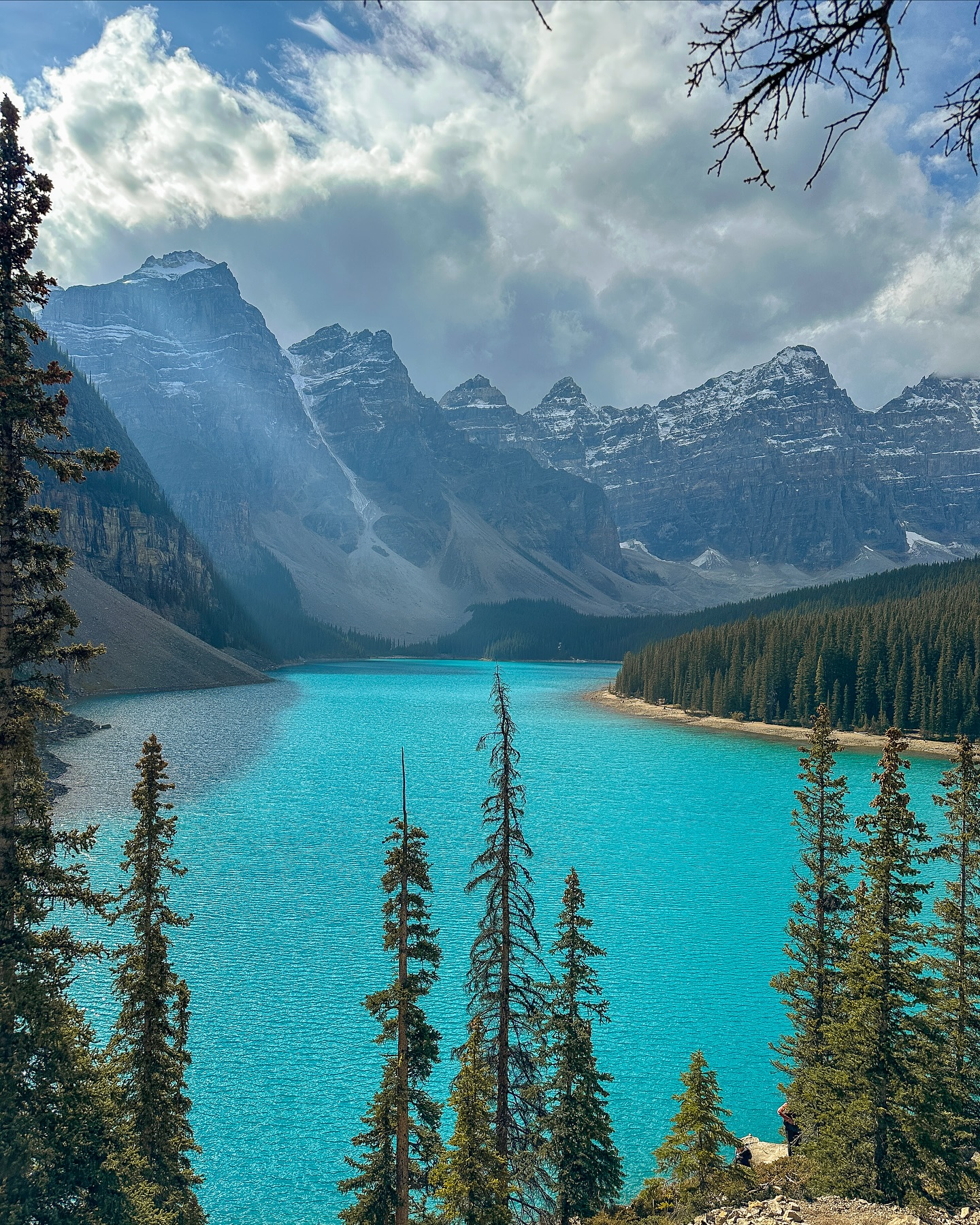
The colour is the first question everyone has, and the answer is genuinely interesting. Moraine Lake's vivid blue-green shade comes from glacial rock flour — ultra-fine particles of rock ground to a powder by the movement of the surrounding glaciers (the Wenkchemna Glacier and several others in the valley). These particles are so small they remain suspended in the lake water rather than sinking, and they refract sunlight at the blue and green wavelengths while absorbing the rest of the spectrum.
The colour changes through the season. In early June, the lake is often a greyish-blue as snowmelt dominates the inflow. By July it deepens to the vivid turquoise that appears in photographs — peak glacial melt delivers the highest concentration of rock flour. By September it begins to settle and the colour shifts slightly more towards green. The difference between a June visit and a July visit, in terms of colour alone, is significant.
The Best Time to Visit Moraine Lake
There is no single best time — different seasons offer genuinely different experiences:
- Mid-June to late June: Lake recently open. Fewer crowds than peak summer. Colour building but not at maximum. Snow still possible on Larch Valley trail
- July to August: Peak turquoise colour. Maximum crowds. Rockpile packed before 7am. Canoe rentals available. Wildflowers along lakeshore trail
- Last two weeks of September: Arguably the best time of all. Larch Valley above the lake turns gold — the combination of golden larches, blue lake and the Ten Peaks is extraordinary. Cooler temperatures, fewer people than August. Reserve your shuttle and your Lake Louise transfer early if you are visiting for the larches
- October onwards: the shuttle season ends and Moraine Lake Road closes for winter maintenance. Snowshoeing and ski touring options exist but require backcountry experience
The Best Photography at Moraine Lake
Moraine Lake is a photographer's dream — and a photographer's frustration if you arrive at the wrong time. Here's what actually works:
The Rockpile — The Iconic Viewpoint
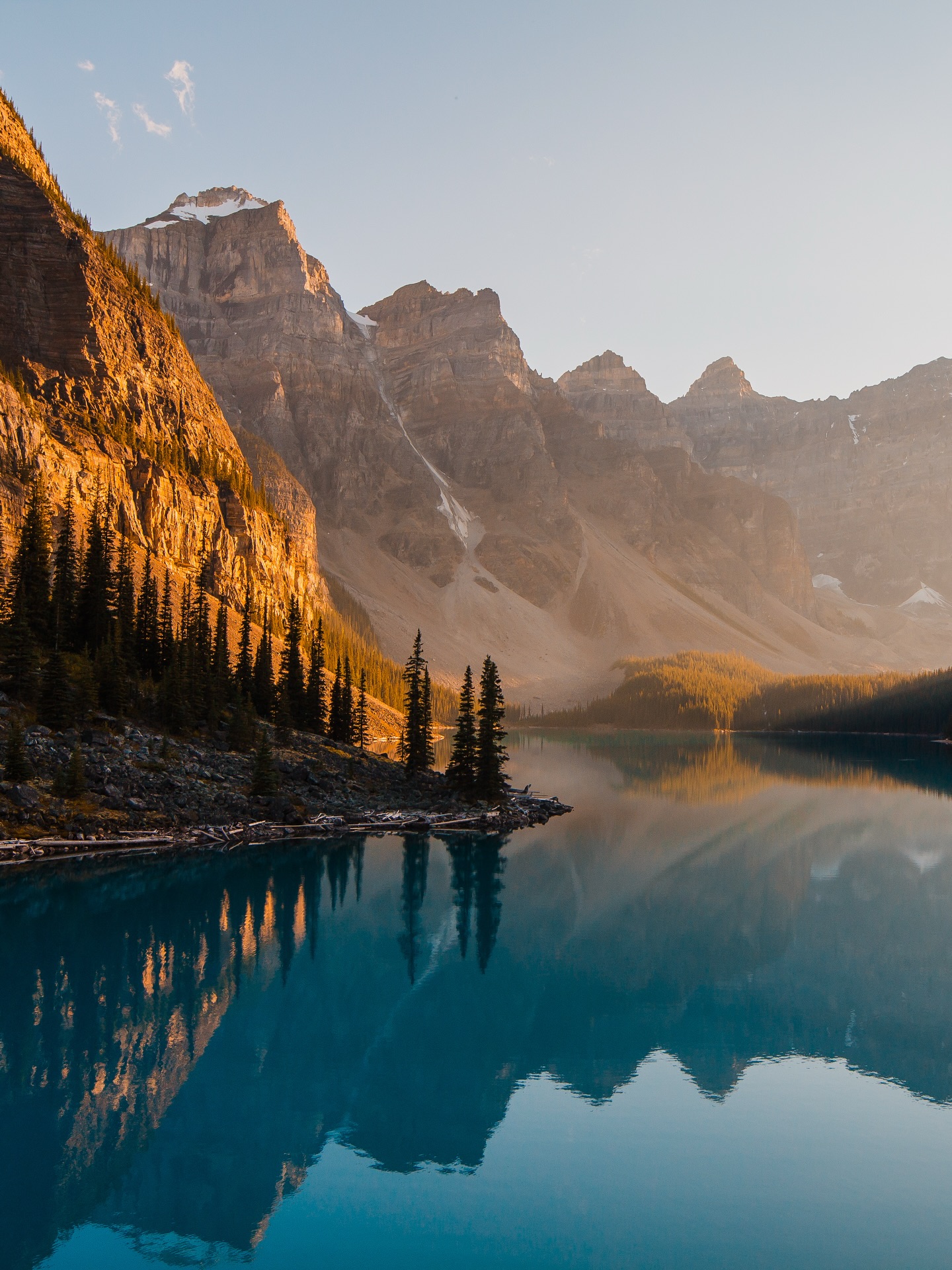
The Rockpile is a natural mound of boulders at the near end of the lake, accessible via a 300-metre trail from the lodge. It provides the view: the full sweep of the lake with all ten peaks behind it, perfectly framed. This is the shot from the $20 bill. Getting it without 200 people in the foreground requires being at the top of the Rockpile before 6:30am in July and August — which means taking one of the earliest shuttle departures of the day, booked well in advance.
For photography specifically, the morning window from 6:30am to 8:30am is valuable for two reasons: the light is soft and low-angled, and the water is usually calm — a glassy surface that reflects the peaks clearly. By mid-morning, afternoon wind starts creating ripples and the direct overhead light flattens the colours. Sunset from the Rockpile is also beautiful but the light hits the mountains from a less flattering angle and crowds remain heavy into the evening.
The Lakeshore
The 3-kilometre lakeshore trail along the northern shore offers views back toward the lodge and Rockpile with the peaks above. In the morning, the reflections on this side of the lake can be extraordinary. Less crowded than the Rockpile — most visitors go directly to the boulders and don't walk the full lakeshore.
From the Water
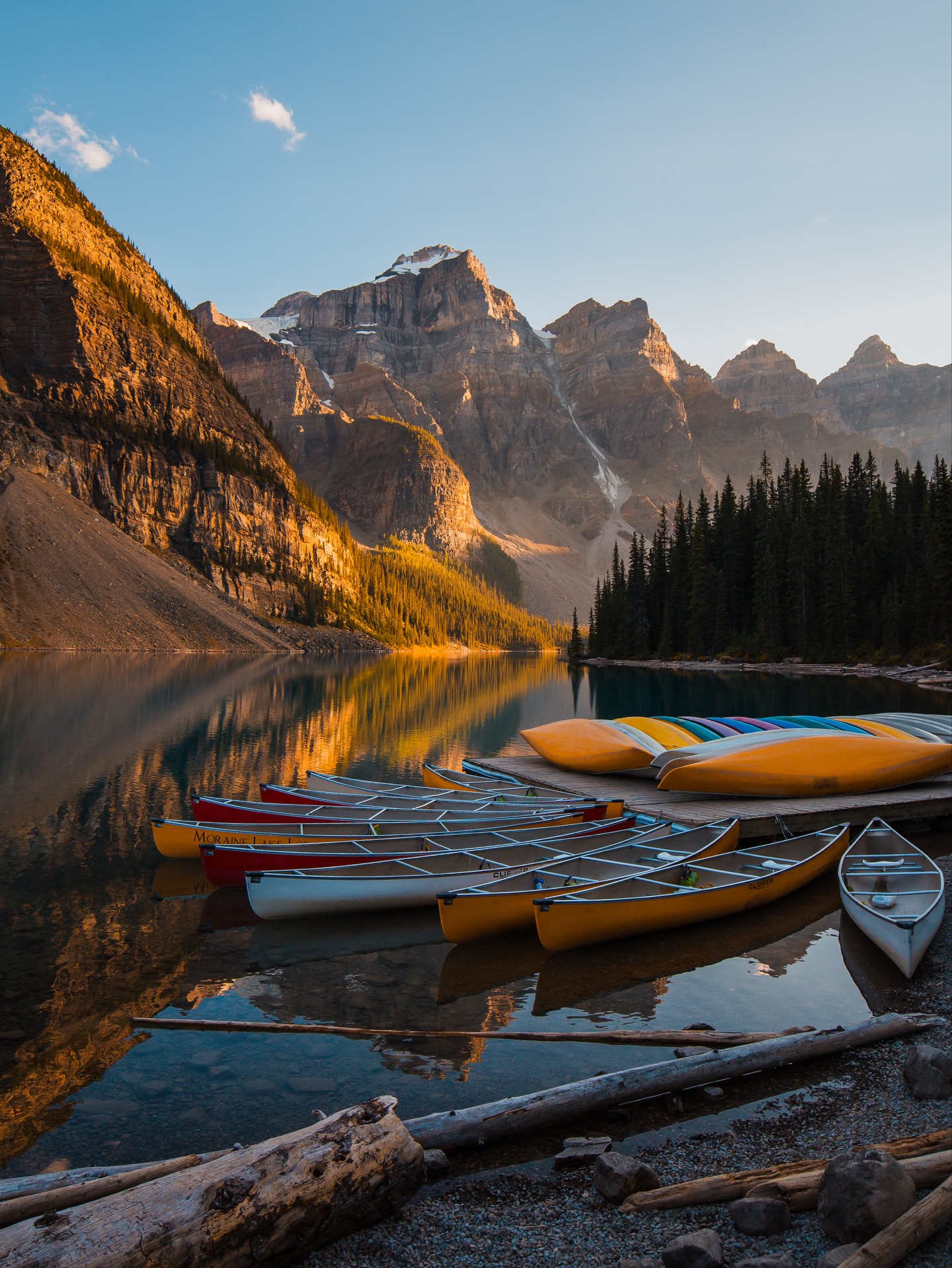
Canoeing on Moraine Lake puts you at water level, with the peaks above and the reflection all around. The view back toward the Rockpile from the middle of the lake looking east is a completely different composition from anything possible on shore — the lodge, the moraine boulders and the mountains create a layered landscape that rewards a wide lens. Canoe rentals are available from the Moraine Lake Lodge boathouse. Get on the water before 9am if you want calm surface conditions.
Hiking from Moraine Lake
Moraine Lake is the starting point for some of the best hikes in Banff National Park:
Rockpile Trail
300 metres return, 5 minutes, suitable for everyone. Provides the iconic viewpoint. Not really a hike — more of an essential stop before anything else at the lake.
Lakeshore Trail
3 kilometres return, easy, approximately 1 hour. Follows the north shore of Moraine Lake to the far end. Good wildflower viewing in July. Quieter than the Rockpile and offers different perspectives of the lake and peaks throughout.
Larch Valley
11.6 kilometres return with 535 metres elevation gain. Moderate to strenuous. Branches off from the lakeshore trail and climbs through one of the finest larch forests in the Rockies to an open valley ringed by peaks. The golden larch colour in late September transforms this trail into one of the most photographed hiking destinations in Canada. In summer, the upper meadows have wildflowers and the views of the Pinnacles above are exceptional. Allow 4 to 5 hours return.
Sentinel Pass via Larch Valley
17 kilometres return with 725 metres elevation gain. Strenuous full-day hike. Continues above Larch Valley to Sentinel Pass at 2,611 metres — the highest point accessible by maintained trail in Banff National Park. The views from the pass are among the finest in the park. A long but achievable day hike for fit hikers. Start early and carry extra layers — conditions at the pass can change rapidly.
Consolation Lakes
5.8 kilometres return, moderate, approximately 2 to 3 hours. A quieter alternative that crosses the boulder field south of Moraine Lake and climbs to Lower Consolation Lake — a serene, far less crowded lake with good mountain views. A good choice for visitors who want to hike but find Larch Valley too demanding.
How to Get from Calgary to Moraine Lake
The most straightforward approach for most visitors — especially those arriving from Calgary or Calgary Airport — is to travel to Lake Louise first by private transfer, check in, and take a pre-booked Parks Canada shuttle to Moraine Lake the following morning.
Trying to do Calgary Airport → Moraine Lake as a single day trip is possible but demanding: 2+ hour drive each way, plus time at the lake. If you're arriving by air, the jet lag and luggage management make this unrealistic for most families. The better approach:
- Day 1: Fly into Calgary Airport → private transfer to Lake Louise hotel (~2 hrs, direct). Check in, rest, dinner
- Day 2: Pre-booked early-morning Parks Canada shuttle to Moraine Lake → Rockpile → Lakeshore Trail → canoe rental → shuttle back late morning. Afternoon: Bow Valley Parkway or Lake Louise lakeshore walk
- Day 3: Lake Agnes Tea House hike or Plain of Six Glaciers → afternoon transfer to Banff
Red Mile provides private transfers from Calgary Airport to Lake Louise with fixed pricing, flight tracking, meet-and-greet and door-to-hotel delivery. When you are not worrying about driving, parking or navigating, you arrive at Lake Louise ready to enjoy the next morning rather than recover from it. Moraine Lake Road itself is reached by shuttle or by an eligible commercial operator, not by your transfer vehicle.
What to Pack for Moraine Lake
- Layers — the lake sits at 1,885 metres and morning temperatures in June, September and October can be near freezing even when Calgary is warm
- Waterproof jacket — afternoon thunderstorms are common in summer, especially July and August
- Sturdy footwear — trail shoes at minimum for Larch Valley and Consolation Lakes; the boulder field approach to Consolation Lakes is rough terrain
- Water and snacks — the lodge restaurant is the only food option and fills quickly. Bring enough for the day
- Bear spray — Moraine Lake and Larch Valley are active bear habitat. Carry it and know how to use it
- Parks Canada pass — required for all passengers. Buy online in advance
- Camera — any camera works. A wide-angle lens captures the full Ten Peaks panorama from the Rockpile; a telephoto compresses the peaks beautifully from the far end of the lakeshore
Visiting Moraine Lake with Children — What Families Actually Need to Know
Moraine Lake with children is completely doable — and genuinely one of those experiences that stays with kids for years. The Rockpile trail is 300 metres and flat enough for toddlers. The lakeshore path is pushchair-friendly for most of its length. The canoe rental is a family highlight that even very young children remember.
The things that make it stressful for families — and the things worth planning around:
- Travelling with a pushchair and bags — a private transfer to your Lake Louise hotel makes the long leg simple; your chauffeur loads and unloads everything at the door, so you only carry what you need for the shuttle
- The Rockpile with small children — the boulders require some scrambling. Young children need hand-holding. It's not dangerous but it's not a smooth path — factor in extra time and energy
- Weather changes fast at 1,885 metres — pack layers for every family member including the ones who will claim they're not cold. A warm afternoon in Calgary can mean 8°C and wind at the lake
- Food for the day — the lodge restaurant is the only option and serves a limited number of covers. Bring snacks and lunch for children who don't do well with waiting
For Solo Female Travelers & Couples — Planning Your Moraine Lake Morning
Moraine Lake at sunrise is one of those experiences that goes straight onto a camera roll and stays there for years. The light on the Ten Peaks at 6:30am, the still water, the colour of the lake before the crowds arrive — it's the version of Moraine Lake that Instagram shows and that genuinely exists, but only if you're there before most people have had breakfast.
The challenge is that getting there at 6:30am means securing one of the first shuttle departures, cycling 14 km in the dark, or walking the Highline Trail before dawn. None of these are relaxing starts if you also have a 2-hour drive in front of them.
The approach that actually works for most solo travellers and couples: stay at Lake Louise the night before, with the earliest shuttle you can reserve already booked — be on the Rockpile before the light changes, no early alarm spent driving. Arriving at Lake Louise by private transfer from Calgary Airport the evening before — settled, fed, no driving stress — means your morning starts with a short hop to the Park and Ride, not a 2-hour drive you are barely awake for.
Red Mile provides private transfers from Calgary Airport to Lake Louise with real-time flight tracking, meet-and-greet in the arrivals hall, and direct delivery to your hotel. Fixed pricing means you know the cost before you book. No surprises, no surge pricing at midnight when flights land late.
Arrive at Lake Louise the night before. Wake up ready.
Private transfer from Calgary Airport to Lake Louise — child seats, fixed pricing, professional chauffeurs who know the mountain roads. View our rates and book.
Moraine Lake Access — Frequently Asked Questions
Can you drive to Moraine Lake?
No. Moraine Lake Road is closed to personal vehicles year-round. Access is available through Parks Canada shuttles and commercial operators that meet all current Parks Canada requirements. Red Mile Limousine Services can provide private transportation to an appropriate Lake Louise connection point. Direct Moraine Lake Road access is offered only when specifically confirmed in writing using an eligible commercially registered vehicle and all required current Parks Canada authorizations. Sedan and SUV bookings do not include direct Moraine Lake Road access.
Does Red Mile drive me onto Moraine Lake Road?
Not with a sedan or SUV. Sedan and SUV bookings do not include direct Moraine Lake Road access. Direct access is offered only when specifically confirmed in writing using an eligible commercially registered vehicle — one registered to transport at least 11 people including the driver — together with all required current Parks Canada authorizations. Otherwise we transfer you privately to an appropriate Lake Louise connection point and you continue on the Parks Canada shuttle.
How do I book a private transfer to the Lake Louise connection point?
Book online at redmilelimousine.com/get-a-quote.html for an instant quote and fixed pricing. Your chauffeur plans your pickup around your shuttle reservation and delivers you door to door in Lake Louise.
How far is Moraine Lake from Lake Louise?
Moraine Lake is approximately 14 kilometres from Lake Louise village via Moraine Lake Road. The Parks Canada shuttle takes roughly 15 to 20 minutes. On foot via the Highline Trail, allow 3 to 4 hours one way.
How far is Moraine Lake from Calgary?
Moraine Lake is approximately 197 kilometres from Calgary — the same distance as Lake Louise, since Moraine Lake Road branches off just before the village. Allow 2 hours to 2 hours 30 minutes from downtown Calgary.
What is the best time to see Moraine Lake?
July and August for the most vivid turquoise colour. The last two weeks of September for the golden larch season — arguably the most spectacular time. Early morning (6–8am) for photography — calm water, soft light, fewest people.
What is the best viewpoint at Moraine Lake?
The Rockpile — a 300-metre trail from the lodge — provides the iconic view of the lake with all Ten Peaks behind it. Arrive before 6:30am in summer to get the shot without crowds. The view from the middle of the lake by canoe is equally spectacular from a different angle.
What hikes are available at Moraine Lake?
The Rockpile Trail (300 m, 5 min), Lakeshore Trail (3 km return, easy), Larch Valley (11.6 km return, strenuous, spectacular in September), Sentinel Pass via Larch Valley (17 km return, strenuous full day), and Consolation Lakes (5.8 km return, moderate).
Why is Moraine Lake so blue?
Glacial rock flour — ultra-fine particles ground from bedrock by surrounding glaciers — remains suspended in the water and refracts sunlight at the blue-green wavelengths. The colour peaks in July and August when glacial melt delivers the highest concentration of rock flour.
What are the Ten Peaks at Moraine Lake?
The Wenkchemna Peaks (wenkchemna means ten in Stoney Nakoda) are ten summits ranging from 3,000 to 3,500 metres that form the dramatic backdrop behind Moraine Lake. They are what makes the Rockpile view so distinctive and unrepeatable.
Can I canoe on Moraine Lake?
Yes. Canoe rentals are available at the Moraine Lake Lodge boathouse during summer season. They sell out on busy days — book ahead or arrive early. Best conditions for canoeing are before 9am when the water is calm.
When do the larches turn at Moraine Lake?
Peak larch colour in Larch Valley typically falls in the last two weeks of September, varying slightly by year. This is the busiest period at the lake — reserve your shuttle and your Lake Louise transfer well in advance if you are visiting for the larches.
Is there a restaurant or lodge at Moraine Lake?
Yes. Moraine Lake Lodge has a dining room open to day visitors (reservations recommended). Lodge rooms book out a year or more in advance. No public cafeteria — bring food and water for a full day visit.